Artwork Requirements, and Why Rough Is Fine
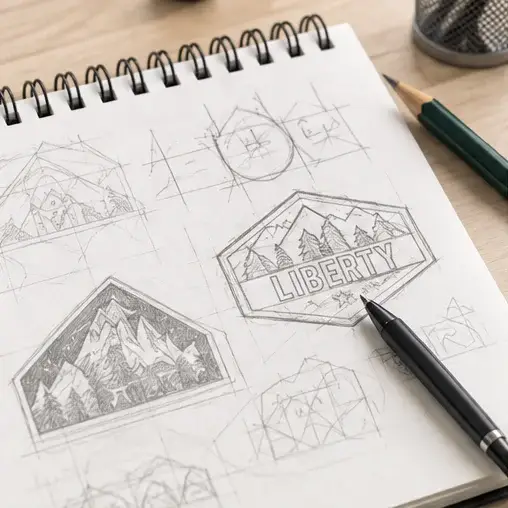
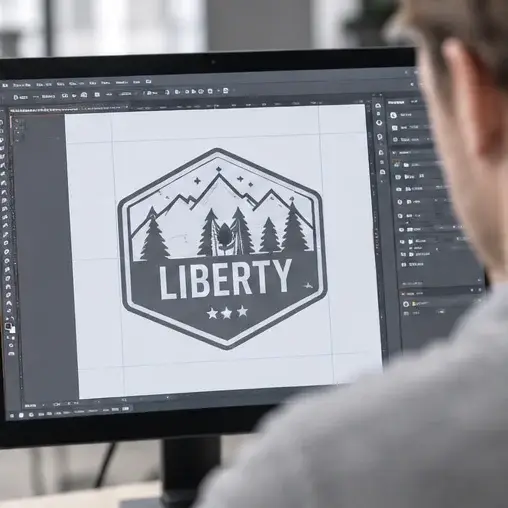
The short version is that we can work from almost anything. A sketch on paper, a phone photo of an existing patch, a screenshot, a logo file from your brand guidelines. Vector conversion and embroidery digitizing are included with a patch order, so the state your artwork arrives in changes how much work we do rather than whether we can do it.
What we cannot do is make a construction hold detail it physically cannot hold, which is what the tables below are about. A file being usable and a design being reproducible are separate problems: a perfect vector file of a design with 2 mm type in it is still not going to work in embroidery, and a phone photo of something bold and simple will. The file format decides the speed. The design decides the outcome.
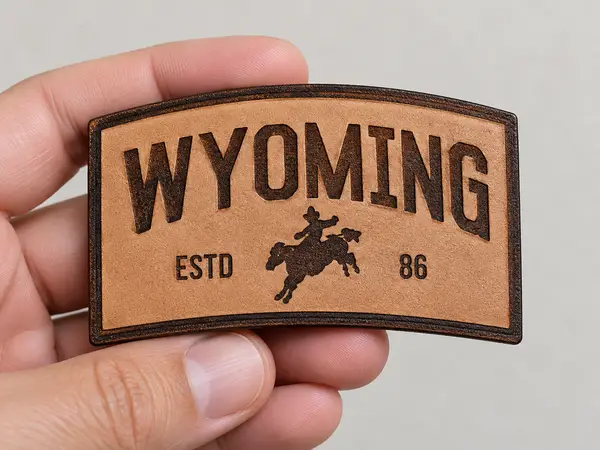
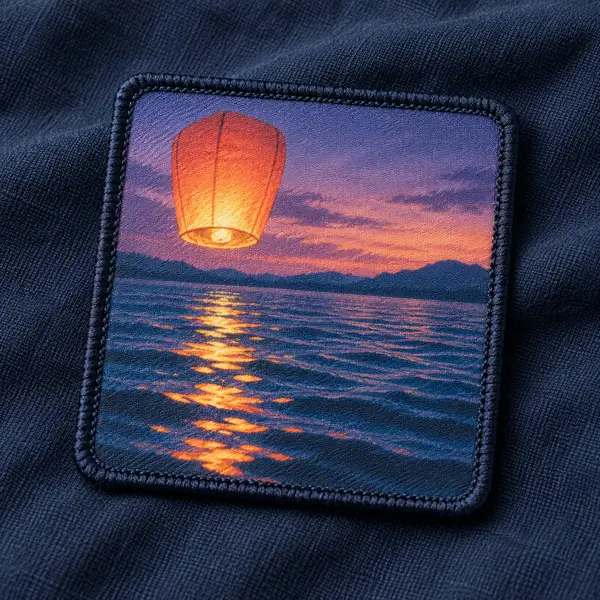
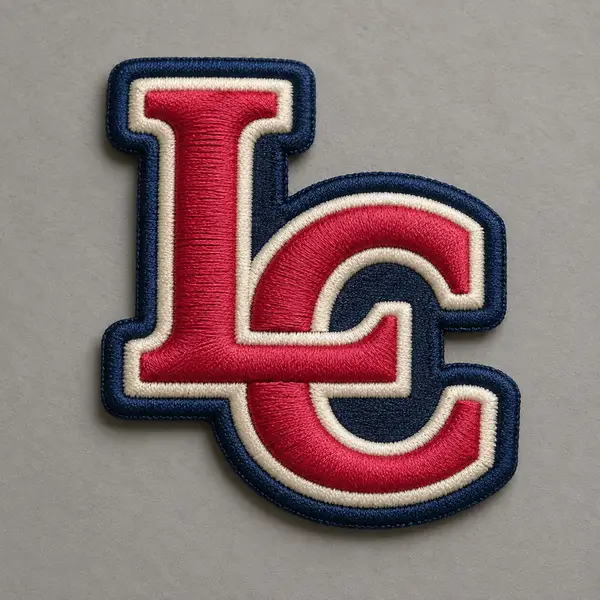
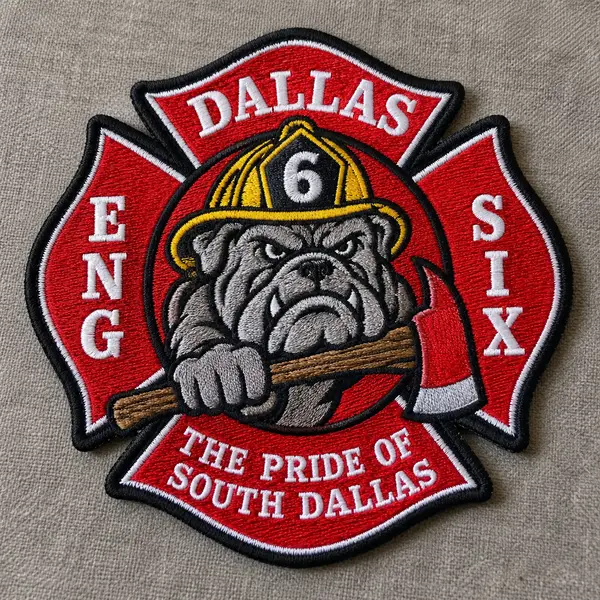
So the table below is the one that matters. It is what each material can physically hold, and it is the thing we check first when artwork arrives. Where a design is beyond what the material can do, we say so on the proof with the specific element named, rather than shrinking everything and hoping.
See What the Material Must Reproduce
A rough source can be rebuilt. The finished construction still controls which lettering, edges, and color behavior can survive.
The table that matters
What Each Material Can Hold
Every construction has a point where fine detail stops reproducing, and it is different for each one. These limits are guidance for artwork drawn with that construction in mind, not guarantees about any particular file. The variable that matters most is the finished size, since the same logo can be comfortably within limits at four inches and impossible at two. Send the artwork at the size you actually want it made.
| Material | Smallest text | Smallest line | Gradients & photos | Notes |
|---|---|---|---|---|
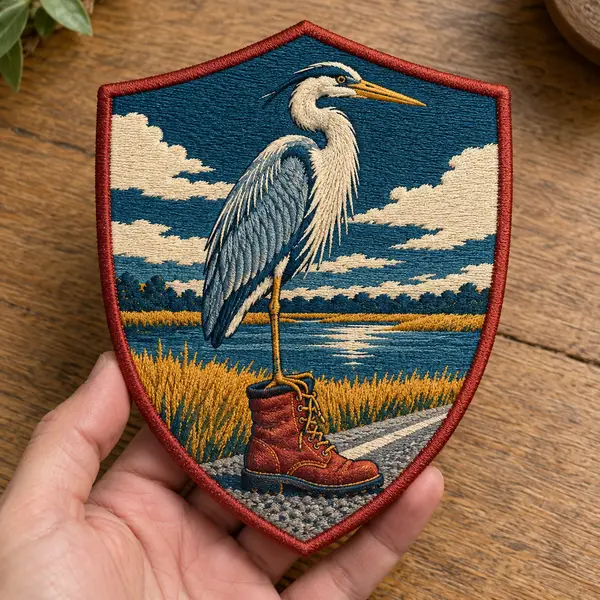
| Embroidered | Reviewed at your finished size | Reviewed at your finished size | No | Bold logos and lettering with weight. Thin serifs and tight counters fill in first, so the letterform matters as much as the height. |
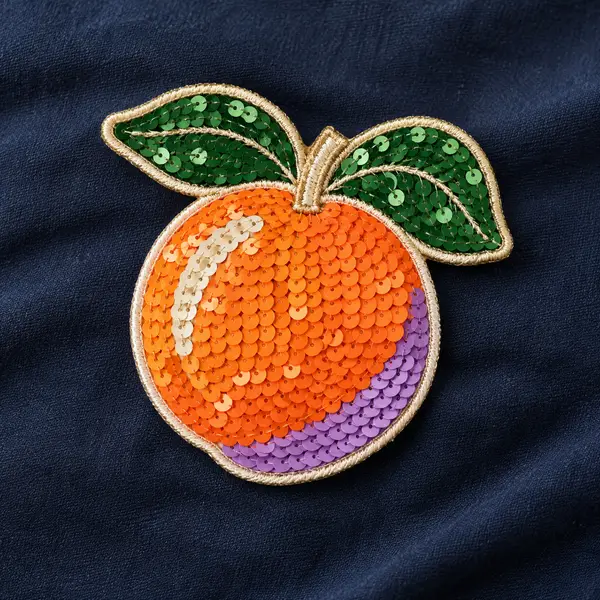
| Woven | About 2 mm | Fine | No | Small lettering, department seals with rim type, and crests carrying a date or a motto. |
| Printed | Set by resolution | Set by resolution | Yes | The only construction that reproduces photographs, gradients and shading. No practical color limit. Send 300 dpi at final size. |
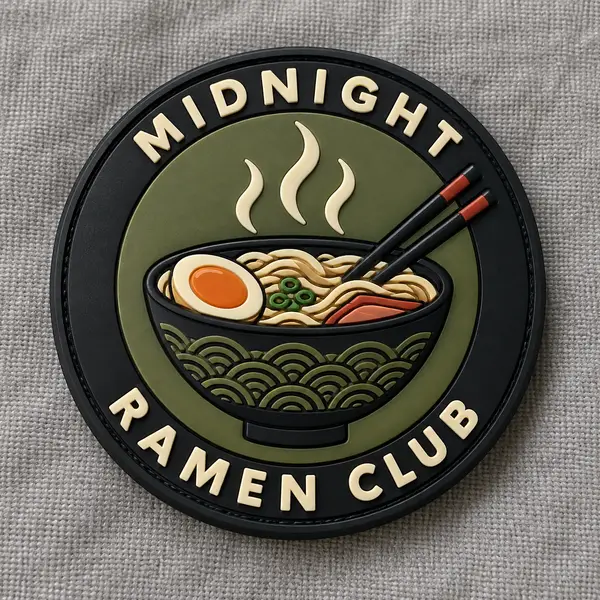
| PVC | About 2.5 mm | About 0.6 mm | No | Up to 12 colors. No gradients: color areas are physical boundaries in the mold. |
| Silicone | Reviewed at your finished size | Reviewed at your finished size | No | Up to 12 colors and three relief levels. Softer and thinner than PVC, so bold artwork holds best. |
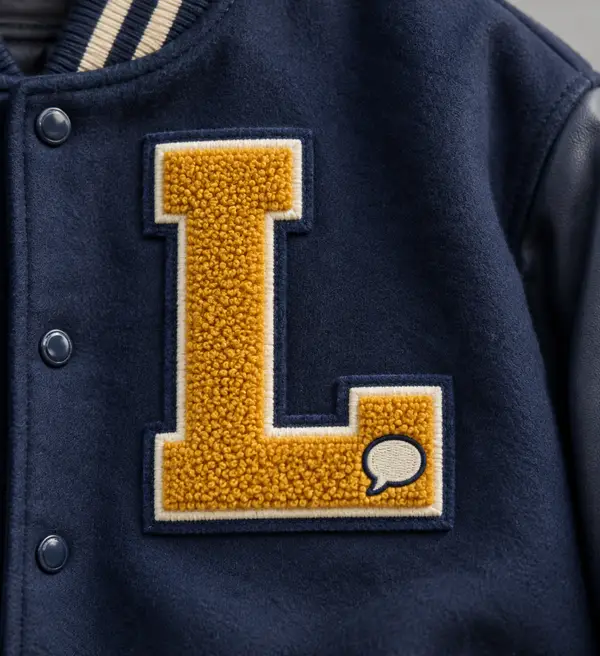
| Chenille | Not held in chenille | Bold forms only | No | Up to nine colors. Around 3 inches minimum piece size. Small type is embroidered over the chenille. |
| Leather | Reviewed at your finished size | Engraving finer than debossing | On leatherette only | Six core colors in genuine leather. Natural grain and tone vary between pieces. |
| 3D puff | About 10 mm letter height | Bold forms only | No | Standard raise 3 mm, range 2 mm to 6 mm. Fine detail is stitched flat alongside the raised elements. |
Speed only, not a requirement
File Formats
Format matters less than most people expect. A vector file moves through review fastest because it needs no rebuilding, and a high-resolution raster file is close behind. Everything else is workable and just means a redraw, which is included. Send the largest and cleanest version you have rather than the one that is most convenient to attach.
| Format | Best for | Speed |
|---|---|---|
| AI, EPS, SVG (vector) | Any construction, any size | Fastest through review |
| Any construction, if the contents are vector | Fast, once we confirm what is inside it | |
| PNG, TIFF (high resolution) | Printed patches especially, at 300 dpi at final size | Fast for printing, redrawn for thread and molding |
| JPG | A usable starting point at any size | Redrawn by hand; compression artifacts are removed |
| PSD and layered files | Useful when elements need separating | Depends on the layers; tell us which ones matter |
| Photos, scans and sketches | Any construction, after a redraw | Redrawn by hand, typically about 24 hours |
Our process
The complete order sequence
Six stages. Three need action from you. Liberty Patches handles the rest.
for a brighter
tomorrow.
Before production
Your input helps Liberty Patches get every detail right.
- You
Share the brief
Artwork in whatever state it is in, the quantity, finished size, placement and date needed. There is no minimum.
- Liberty Patches
Review construction
Liberty Patches checks the design against the construction, redraws rough artwork, and includes vector conversion or digitizing with a patch order.
- You
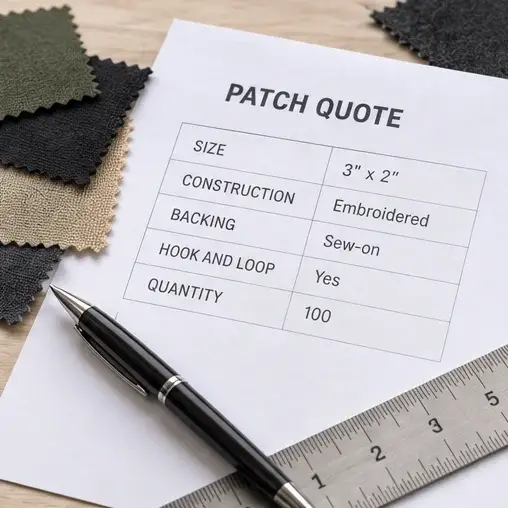
Confirm the quote
The quote confirms size, construction, backing and quantity. Valid for 14 days. A quote is a price, not a commitment.
- You
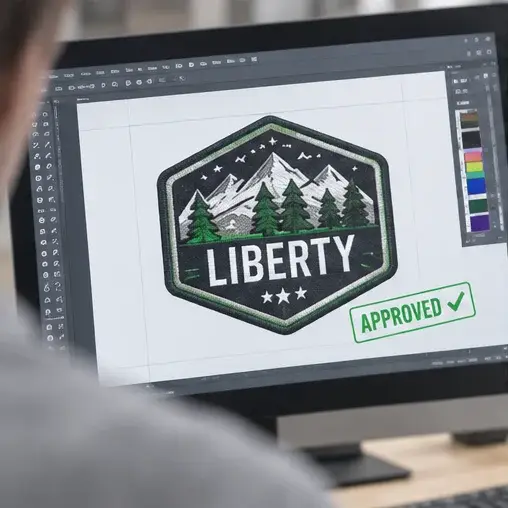
Approve the proof
A digital proof shows size, colors, border and backing. Nothing is made before approval.
Production starts after this approval.
After approval
Liberty Patches handles the rest.
- Liberty Patches
Produce and inspect
Production follows approval and payment. The first piece is checked before the rest continues, and every piece is inspected afterward.
- Liberty Patches
Dispatch and receive
Finished patches are packed and shipped by UPS or FedEx. Tracking is sent by email or SMS where available.

