Custom Police Patches: Department Seals, Duty Sets and Subdued Versions
No minimum order
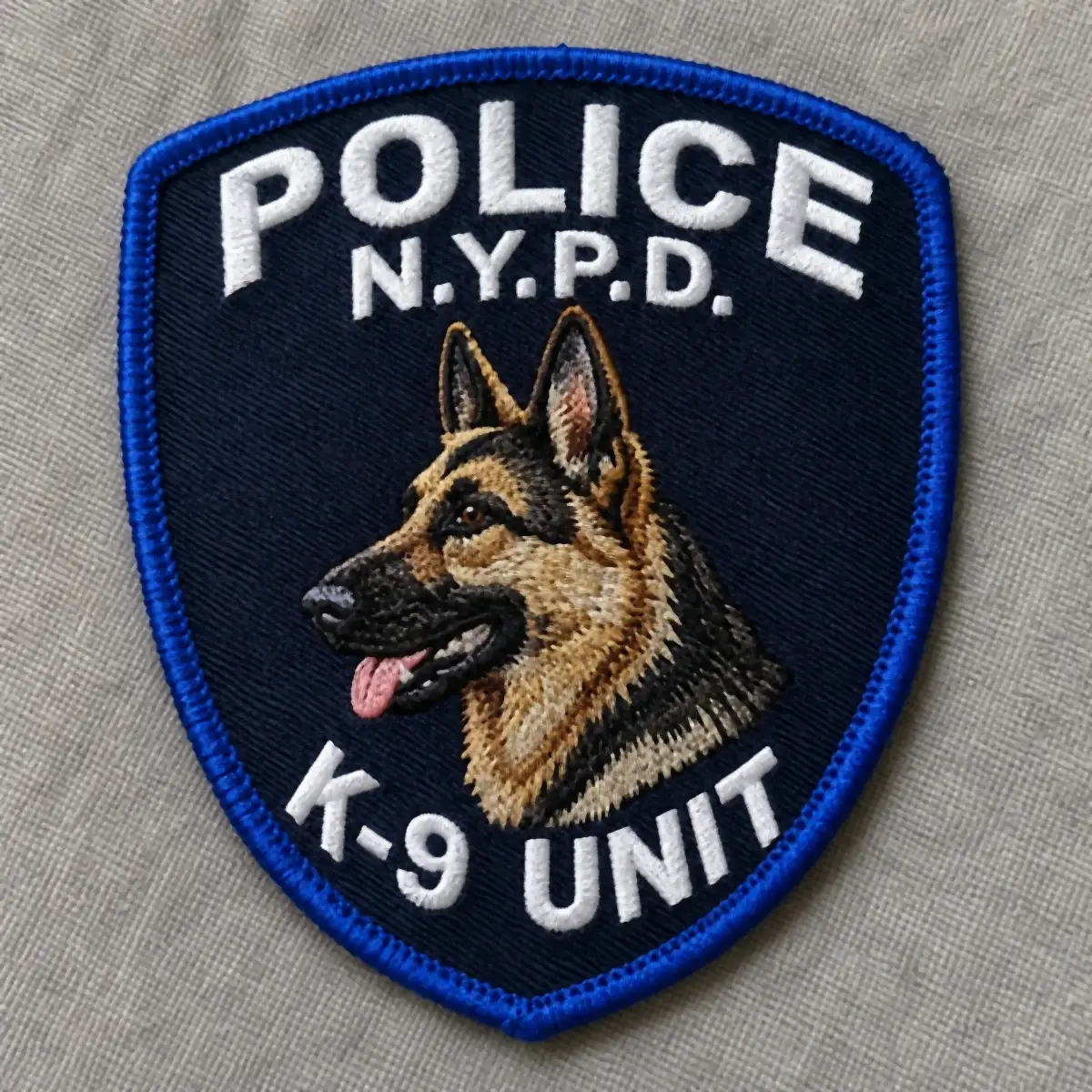
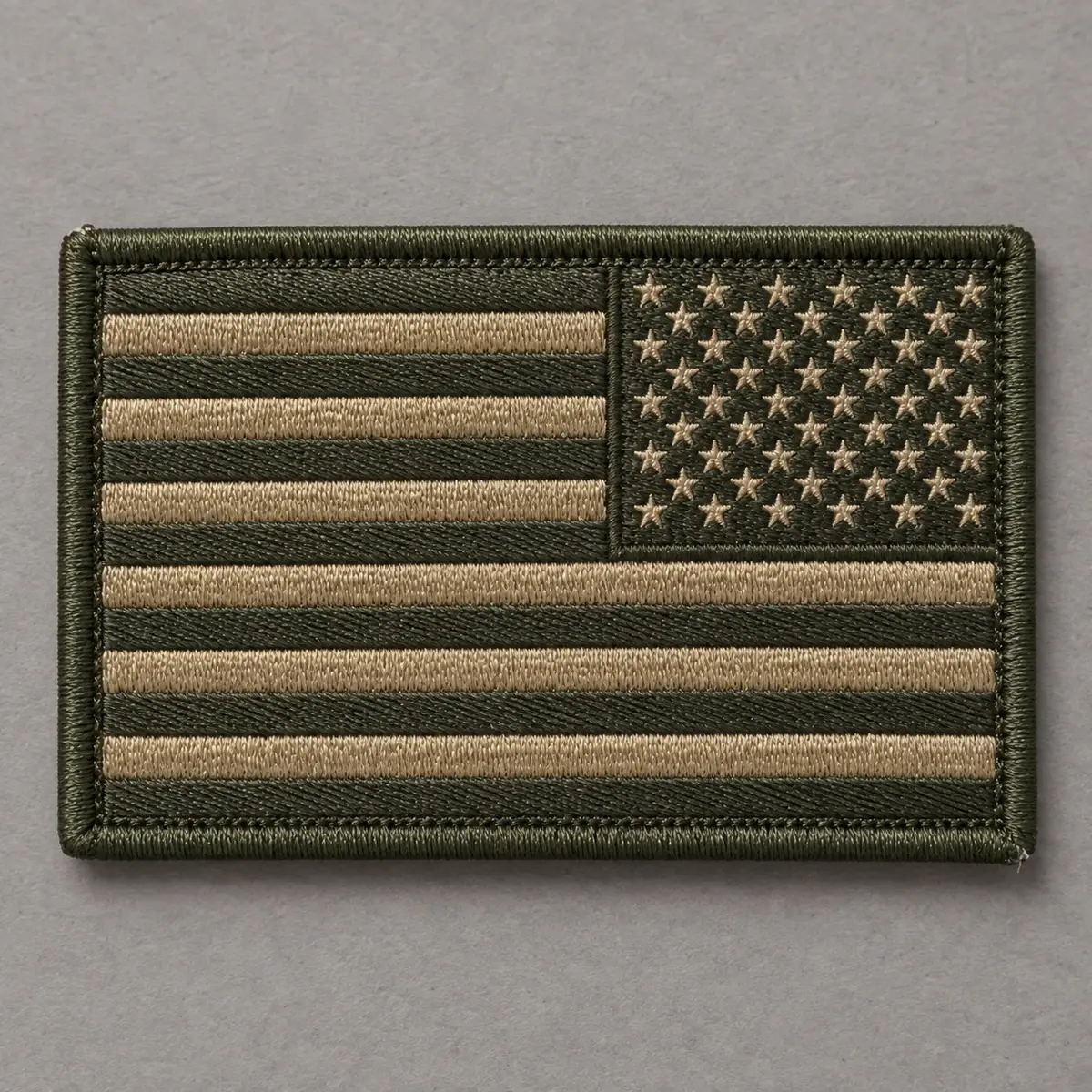
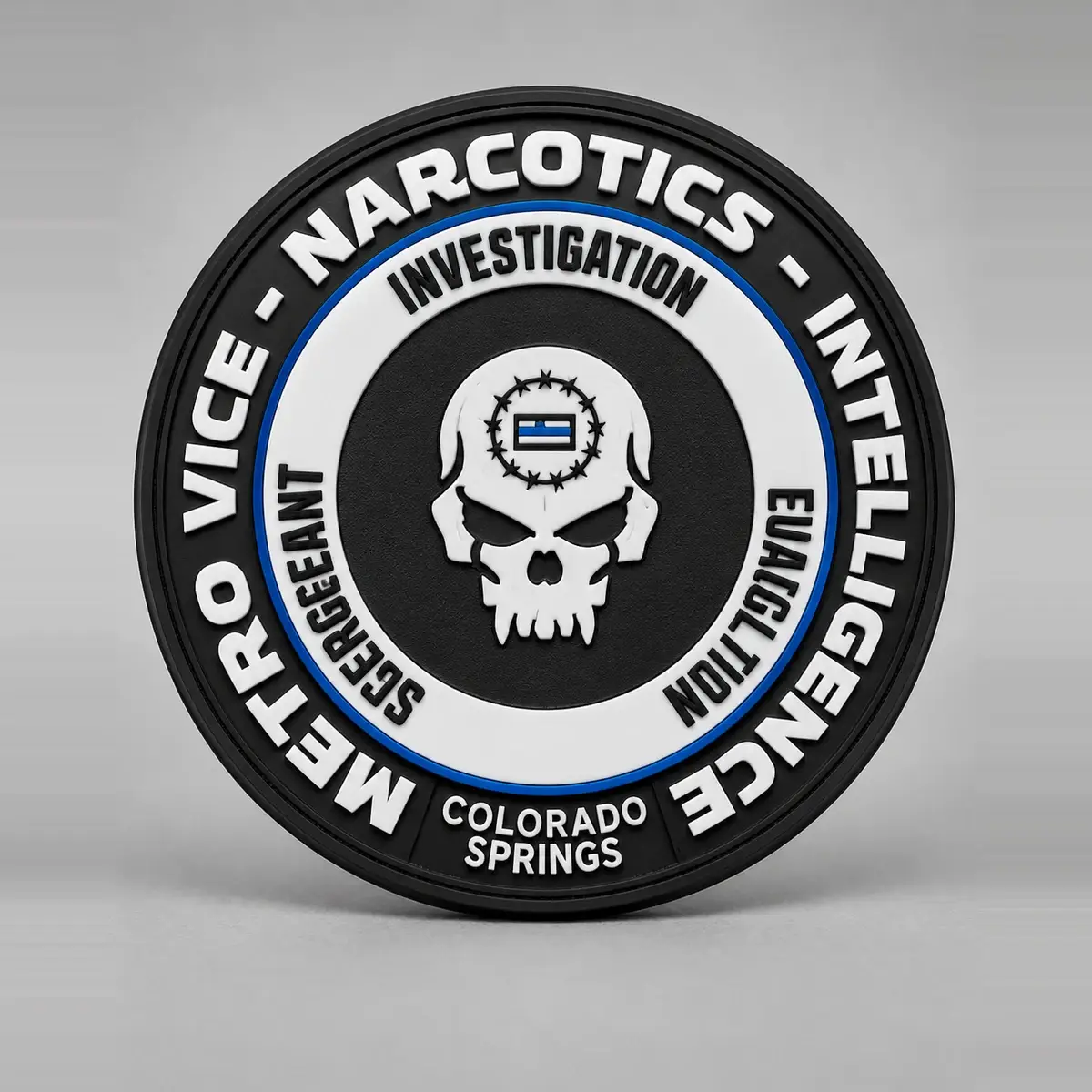
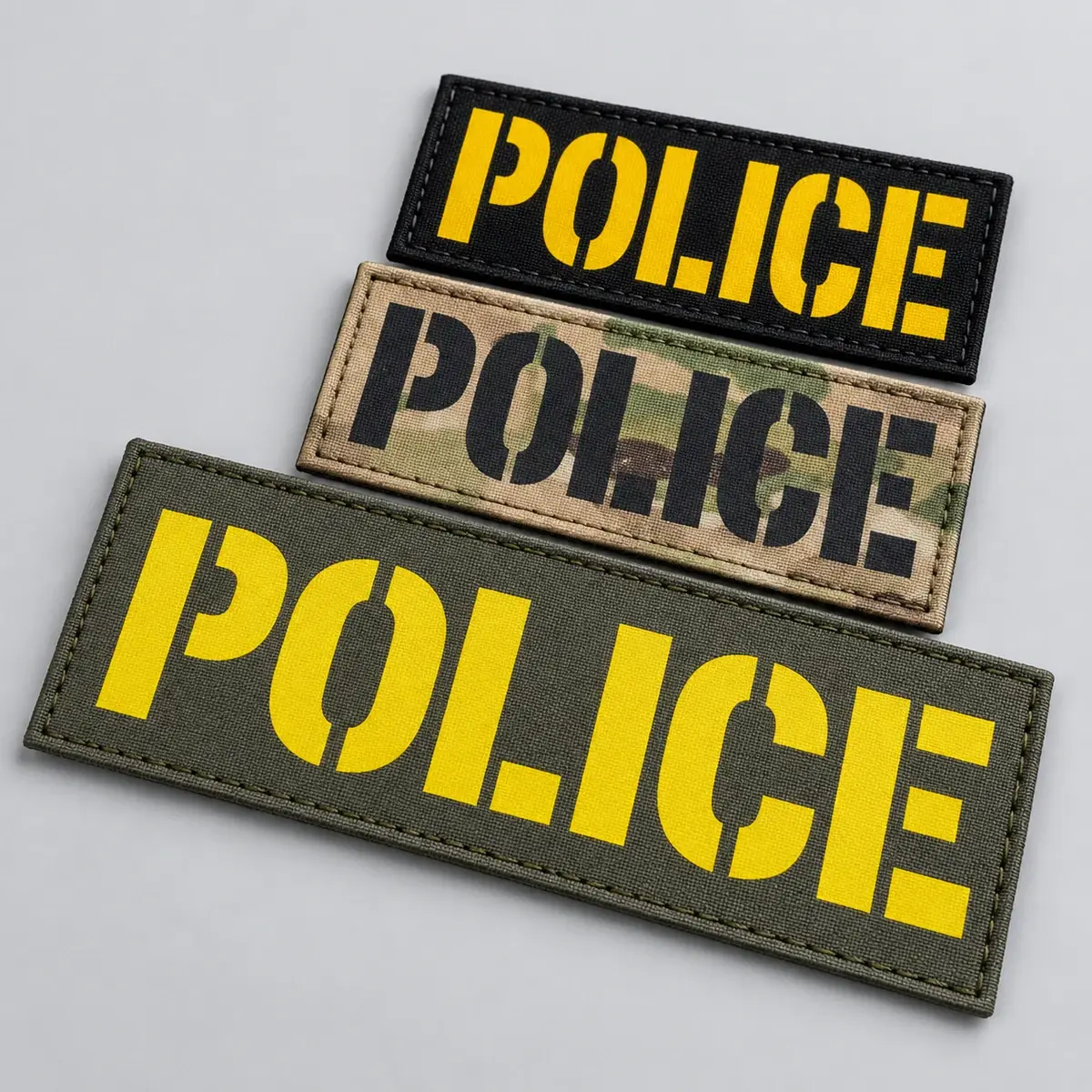
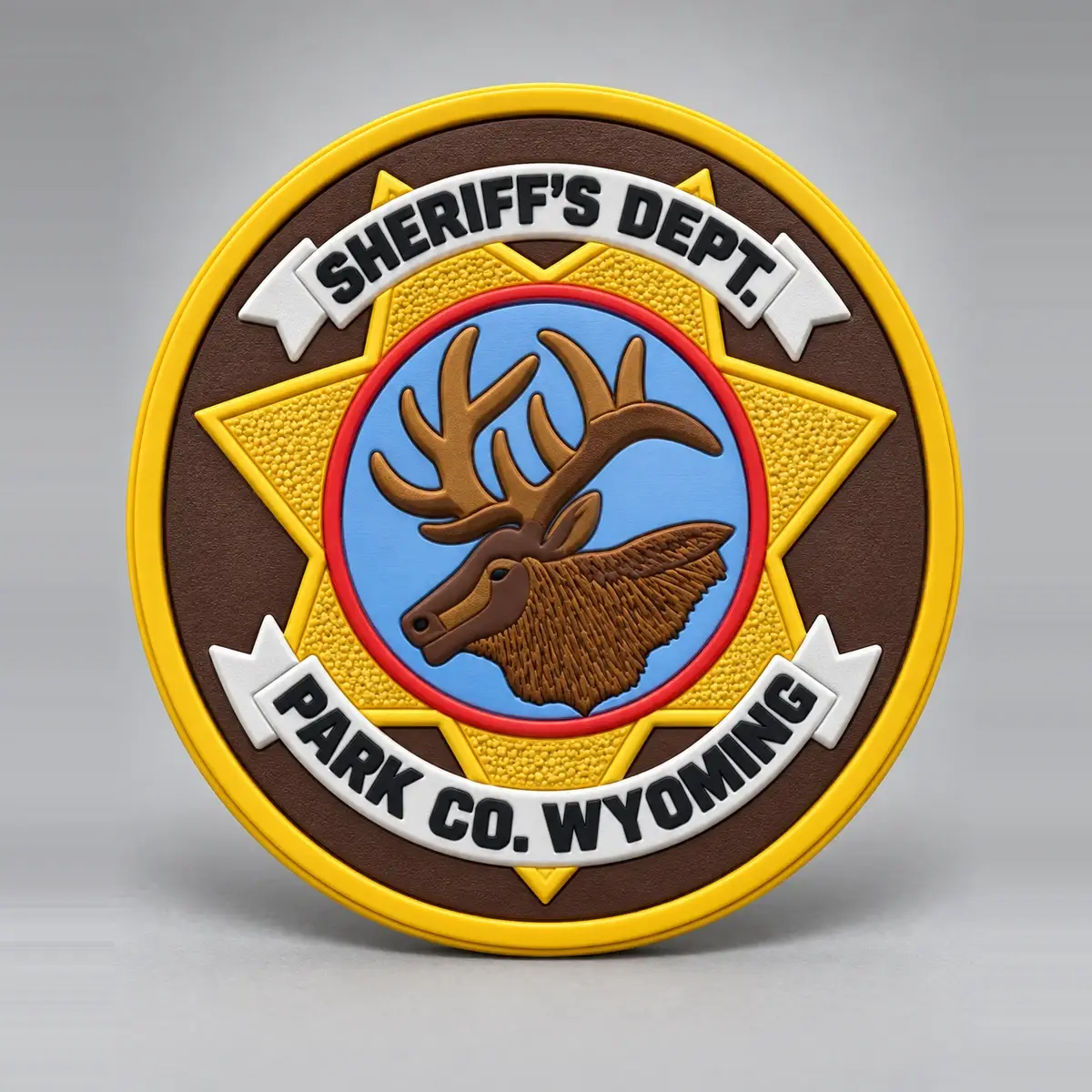
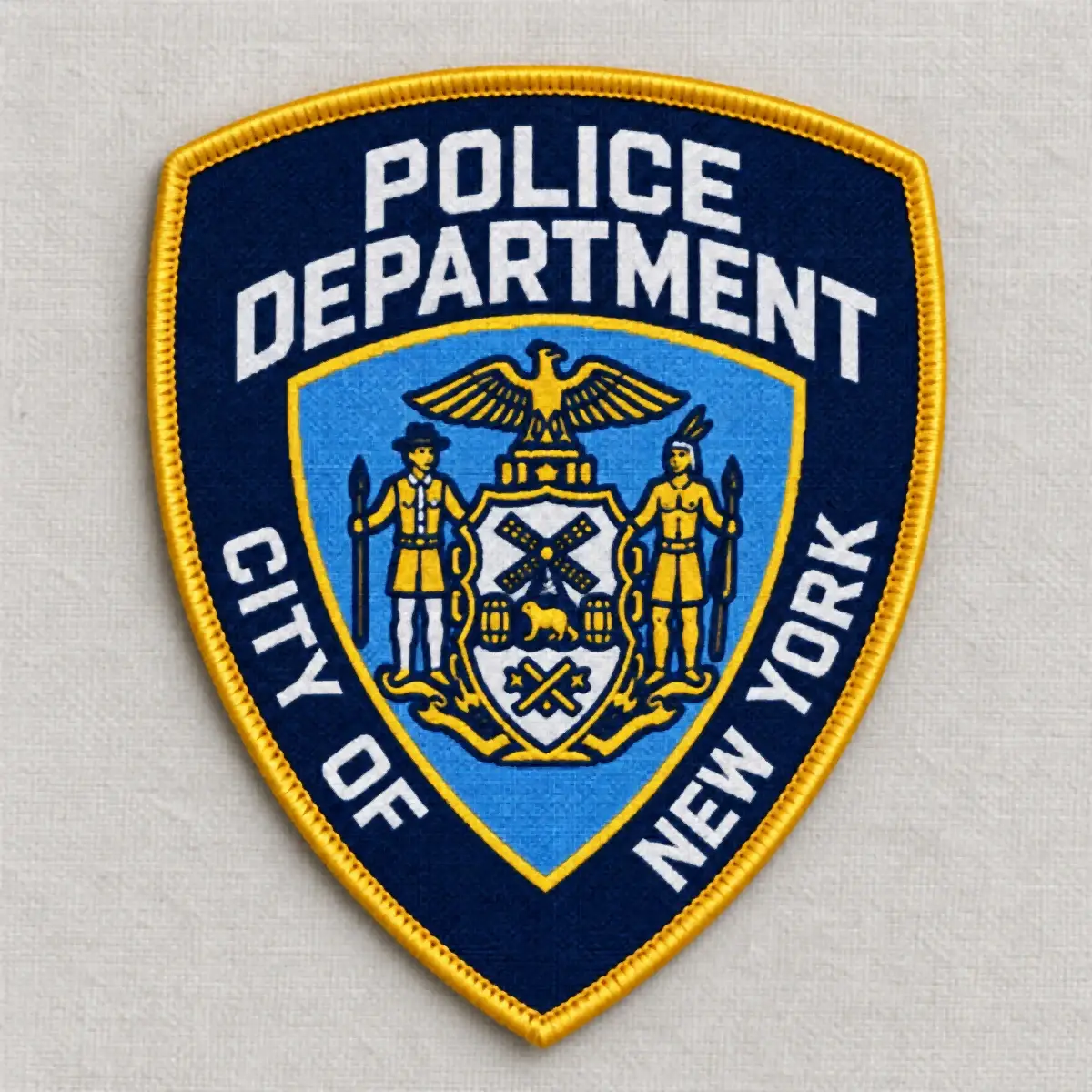
- No minimum order. One patch is a real order.
- First digital proof in 24 hours, one revision included
- No setup or digitizing fees
- Rough artwork is fine. We redraw it.
A department seal is a small patch carrying a lot of information: a department name, a jurisdiction line, often a state outline or a city crest, sometimes a founding year. On a shoulder placement at four inches that is a legibility problem before it is anything else, and it is where the construction conversation on this page starts.
Most departments order more than one piece. A full-color seal for the dress uniform, a subdued version for duty wear, name tapes, badge tabs, and flashes for units or assignments. These have to agree with each other in color, letter height and border finish, and that is far easier to guarantee in one order than across several placed at different times. Send the full list even if you buy in stages.
Two things stay with the department. The artwork has to be a design your department authorizes, and you confirm that when you order. And the construction has to suit the actual garment: a seal on a wool dress shirt and the same seal on an outer carrier are different production decisions. We build to the specification you send us and we make no claim about approval, compliance or certification on anyone's behalf.
What departments order
Five pieces on one uniform
These five cover most department orders. Few departments need only one of them, and the set is much easier to keep consistent when it is planned and proofed together.
05Common orders
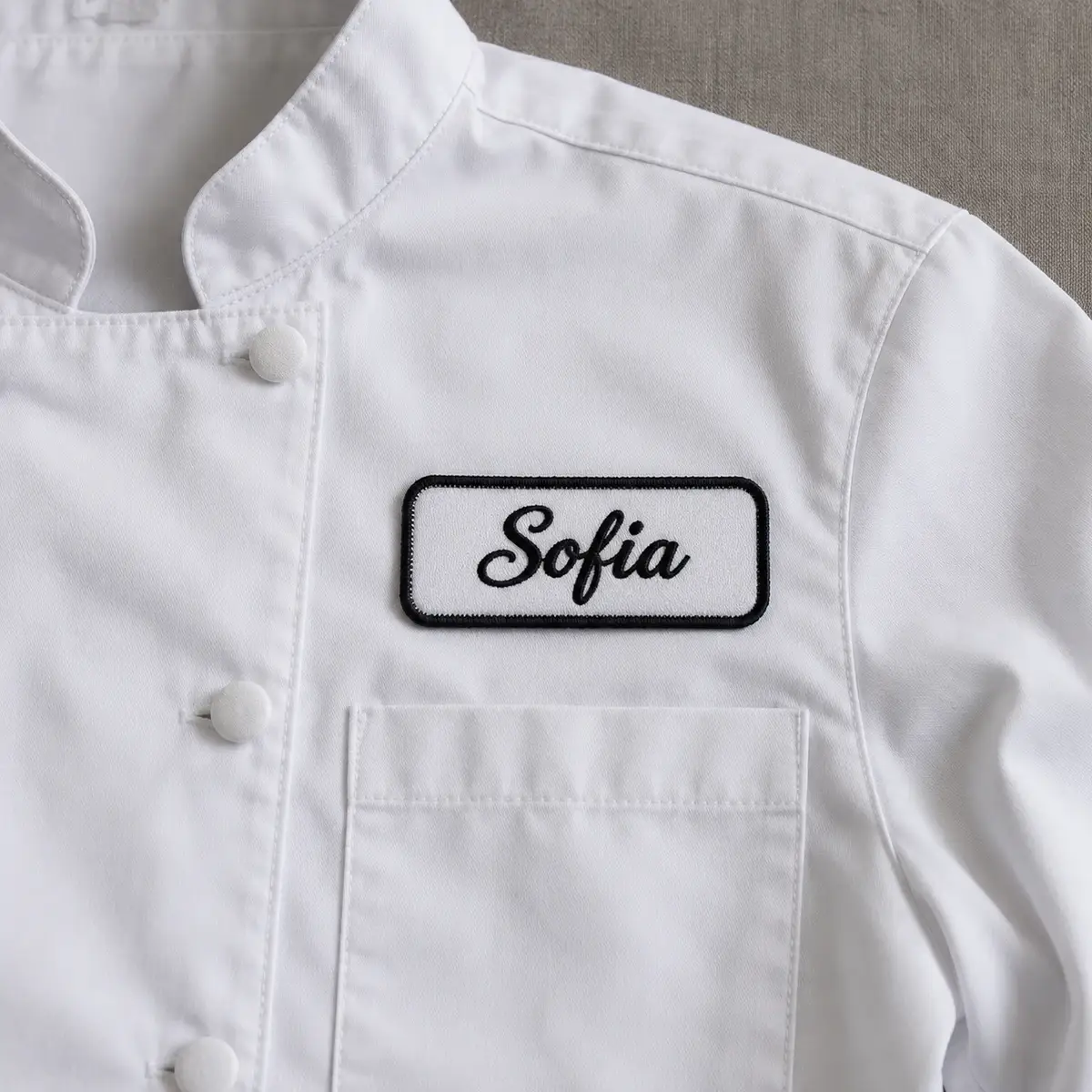
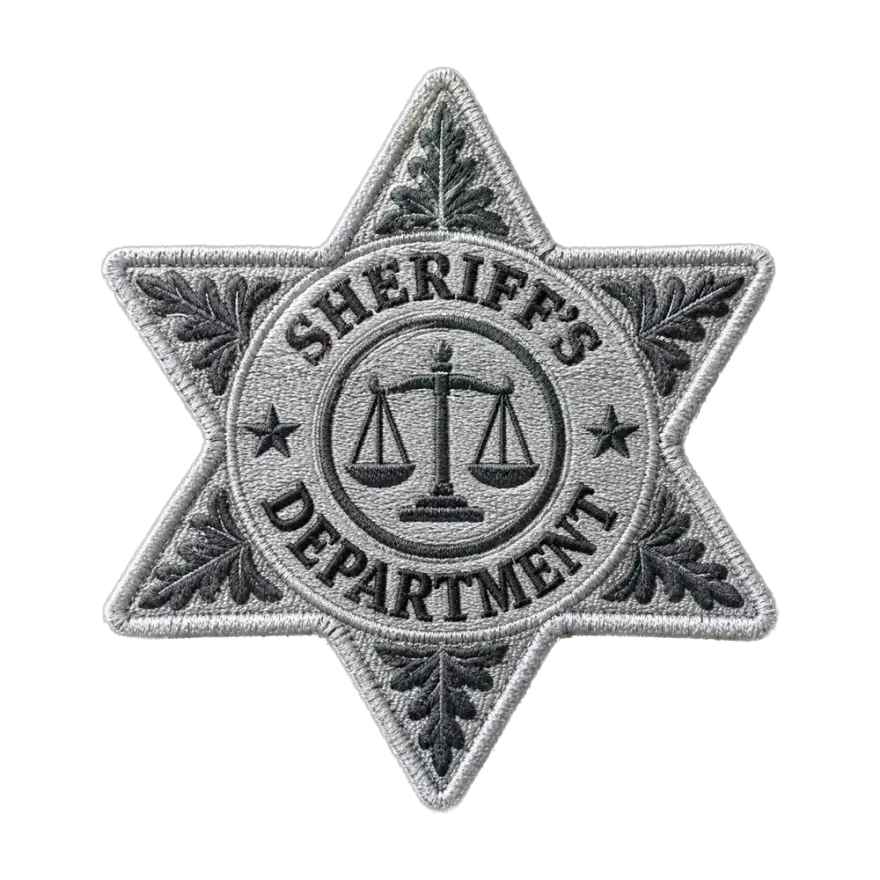
Embroidered Patches for Shoulder Seals
The main emblem and the piece everything else is matched to. Seals carry a department name and a jurisdiction line, and those are almost always the smallest type on the patch. We check them at your finished size and say plainly whether they hold, because a jurisdiction line that turns into a smudge on the sleeve is the failure mode here. Send the approved artwork you work from.
View Embroidered Patches page
Velcro Patches for Removable Duty Badges
The same seal in low-contrast colors for duty or tactical wear, often with hook backing so it can be swapped between carriers and outer layers. Subdued palettes lose contrast by definition, so detail that reads in full color can disappear. We adjust the artwork for the reduced palette rather than recoloring it and hoping it works.
View Velcro Patches page
Name Patches for Tapes and Badge Tabs
Name pieces and rank or role tabs that have to look like they belong with the seal. We set one letter height across the whole set, starting from the longest name in your roster, so a long surname and a short one produce pieces that match. A different name on every tape costs no more than the same name repeated.
View Name Patches page
Name Patches for Unit and Assignment Lettering
Smaller pieces identifying a unit, a specialty, a shift or an assignment, worn under or beside the seal. The matching problem is the same as everywhere else on this page: color reference, letter height and border finish all have to agree. Assignments change more often than the seal does, so send the whole list you expect to use at the start, even when you only need two today, because a flash added a year later is matched from a finished patch rather than from the source file.
View Name Patches page
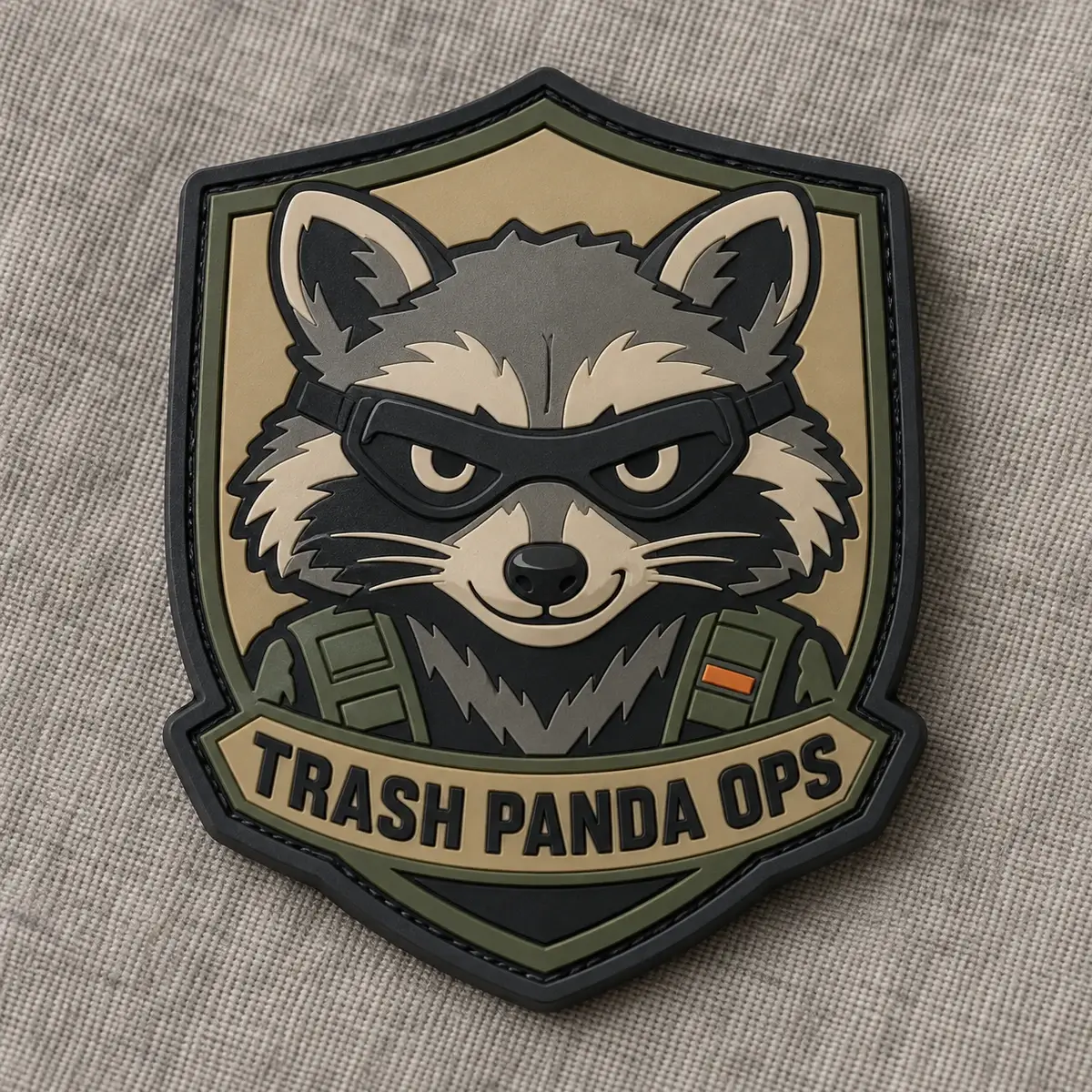
Tactical Patches for K9 and SWAT Gear
Usually the boldest artwork a department orders, and often the piece that ends up on gear rather than a dress uniform. Teams frequently want a shoulder version and a carrier version of one design, so plan both at the start: the shoulder piece stitched and sewn, the carrier piece subdued, molded or hook-backed so it can be washed and swapped. A unit patch can borrow part of the department seal, which keeps it recognizably yours. Fine lettering does not survive molding, so a molded version of a detailed design is a simplified one, and we show that simplification on the proof.
View Tactical Patches page
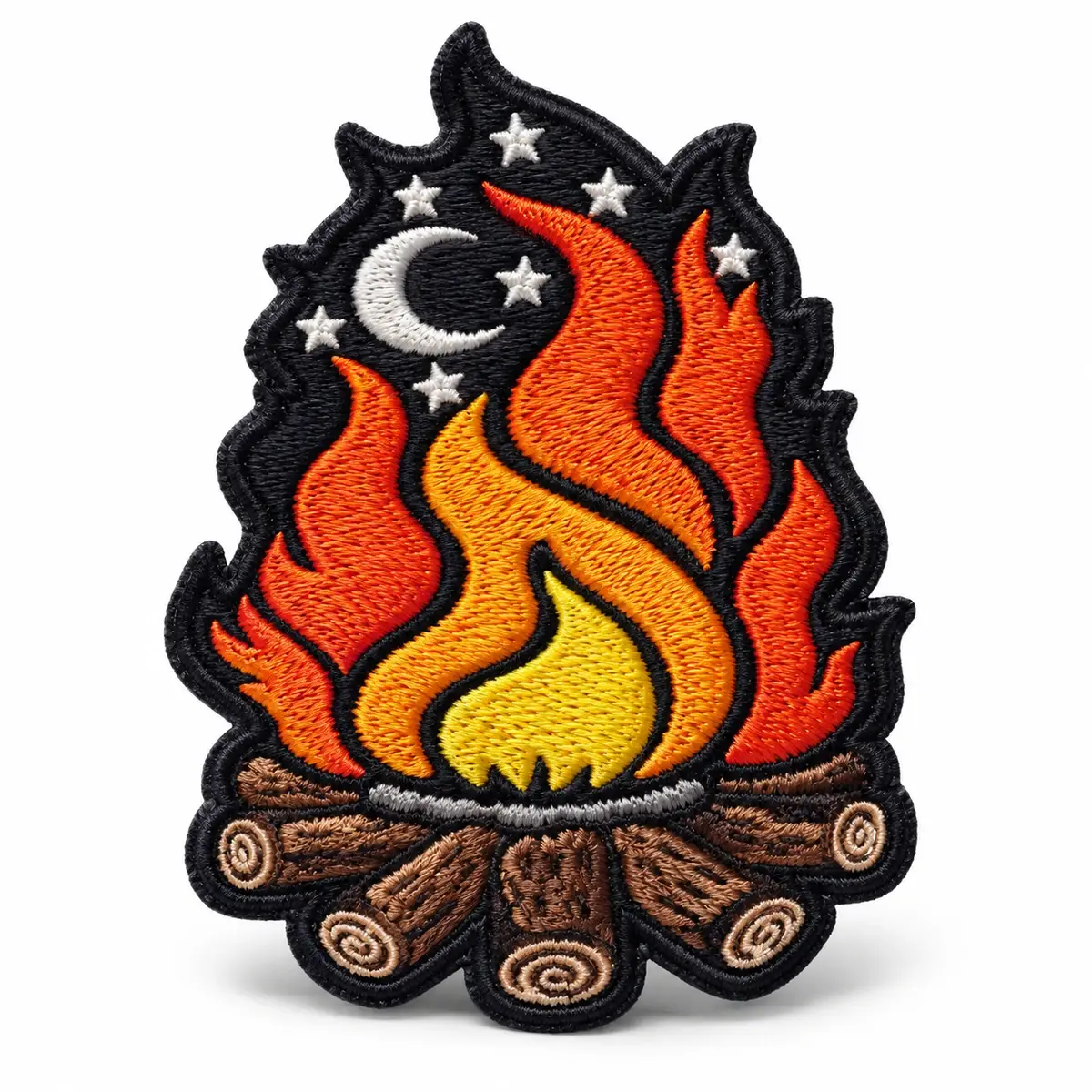
4″
A typical shoulder seal
Four inches is a common size for a shoulder seal and a sensible starting point. The number that matters is the space the patch actually has on the sleeve of the garment your officers wear, measured with the seam taken into account. Shoulder placements are more constrained than they look, and a shirt sleeve and an outer carrier give you different room.
Once the space is set, check the smallest type against it. A department name and a jurisdiction line inside a seal shape leave very little room, and shield and crest outlines narrow toward the bottom where secondary type often sits. If it does not hold, the options are a larger patch, fewer words, or a construction that carries finer detail.
For a traditional seal with thread texture on a dress uniform, choose custom embroidered patches. When the department name or jurisdiction line is at risk, choose woven patches for fine detail. For duty pieces on carriers and outer gear that get wet, choose molded PVC patches.
How a department set is planned
Three decisions before production
Department orders go wrong in ways that are entirely predictable, and every one of them is avoidable at proof stage rather than after the run. These are the three we settle first.
The jurisdiction line
The smallest type in a seal is usually the jurisdiction or department line, and seal shapes narrow exactly where it often sits. We check it at your finished size and tell you what holds before you approve rather than after the patches arrive.
One set, one reference
Seals, tapes, tabs and flashes have to agree in color reference, letter height and border finish. Ordering them together guarantees that. Ordering them across two years is how a uniform ends up looking assembled from different suppliers.
The garment decides construction
A seal on a wool dress shirt and the same seal on an outer carrier are different production decisions, with different attachments and sometimes different constructions. We choose against the actual garment rather than against the design alone.
Send the seal and the full list
Give us the authorized artwork, the space on the actual garment, and every piece that has to match the seal. We will tell you what holds at that size and quote the set. We send a digital proof within 24 hours before anything is stitched.
What the order involves
Specifications
Everything you need to know before ordering your custom police patches.
- Size range
Set by the space on the sleeve of your actual garment. Around 4 inches is a common shoulder seal
- Colors
Set by the construction you choose and confirmed on the proof
- Backing options
Dress seals are usually sewn; duty and carrier pieces are usually hook-backed
- Color handling
Matched as closely as the available range allows. Subdued palettes are adjusted deliberately rather than desaturated
- No minimum order
- 14–16 Days
- Standard delivery
- Free first proof
- Free US shipping
Order as few or as many as you need.
The figure the quote is written against.
One revision included. Nothing is made until you approve it.
Worldwide shipping quoted per destination.
Quality craftsmanship. Fast turnaround. Zero hidden fees.
How It Compares
vs. Woven instead of embroidered
Embroidery is the traditional finish for a department seal and it carries emblem artwork well. Woven holds smaller type, which is the deciding factor when a department name and a jurisdiction line both have to fit inside a seal at four inches. Where the type is the problem rather than the artwork, woven buys real headroom without changing the shape.
Embroidery for the traditional seal. Woven when the jurisdiction line is at risk.
vs. A molded duty version
Molded patches shed water, wipe clean and take hook backing well, which suits carriers and outer gear rather than a dress shirt. They cannot hold the fine type a seal carries, so a molded duty version usually means a simplified design rather than the same one. Treat it as a deliberate second patch rather than a substitute for the seal.
Molded for carriers and weather. Thread for the seal with its full detail.
vs. A wider staff program
Where the requirement extends beyond department insignia into badges, name strips and role tags across civilian staff as well, the uniform patches page covers how that program is planned and reordered over time. This page stays with department seals, duty versions and the pieces that have to match them.
Stay here for department insignia. Use the uniform page for a wider staff program.
Before you send artwork
Worth reading first
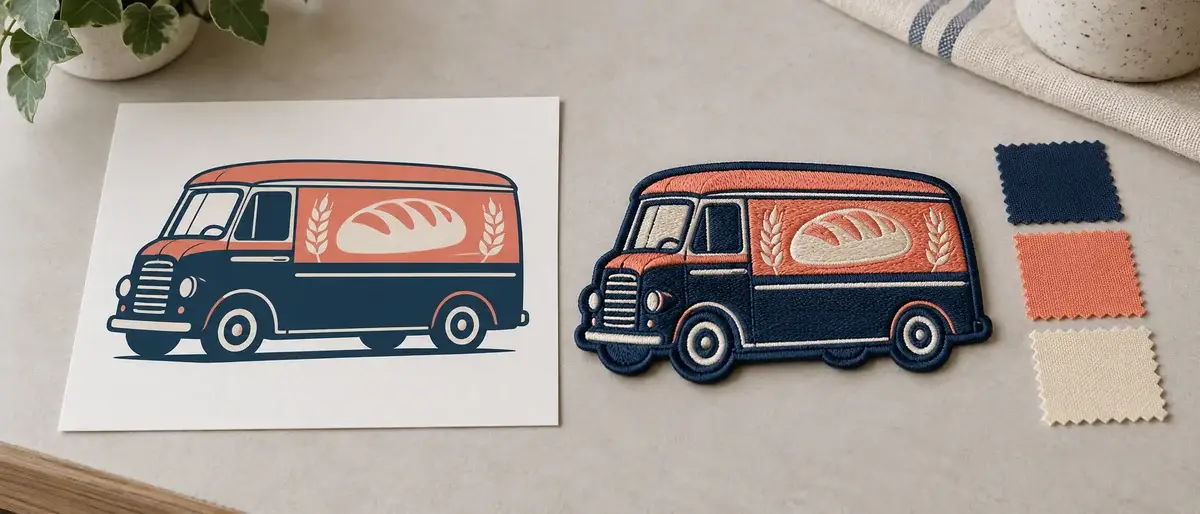
How Embroidered Patches Are Made
What happens between approved artwork and a finished seal, including where the smallest type is checked.
READ MORE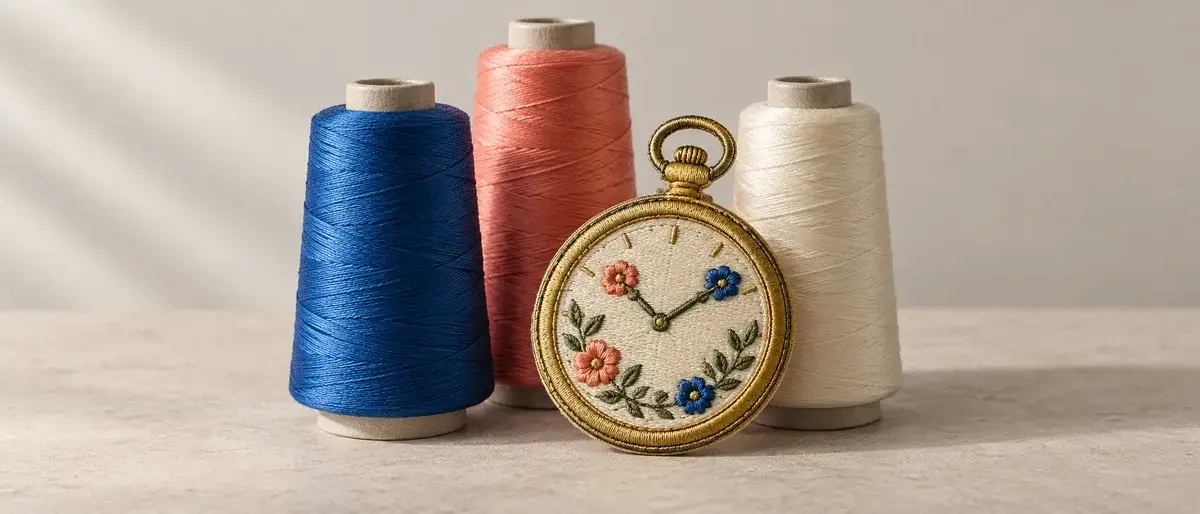
Thread Choices for Patch Color
Thread and color reference choices, which is how a department's specified colors get matched as closely as the range allows.
READ MORE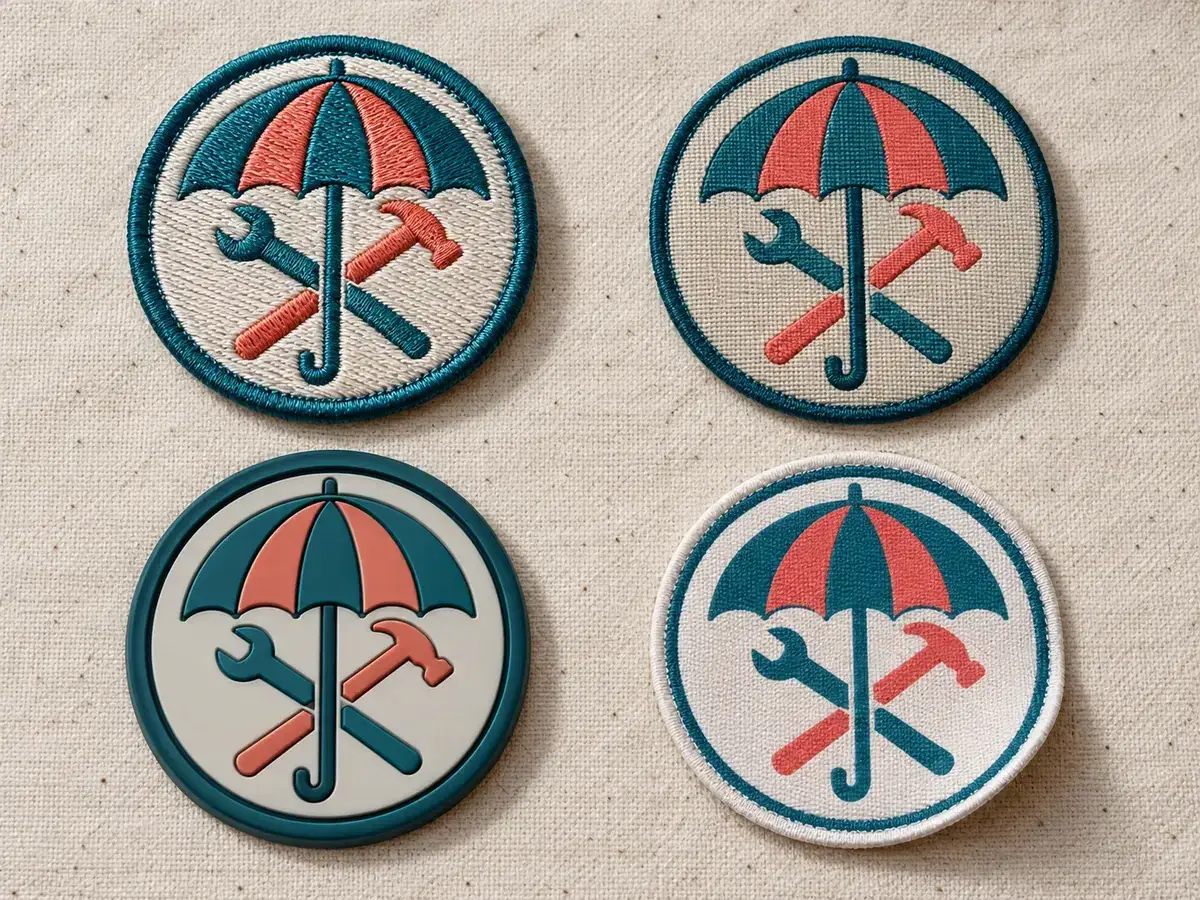
Woven vs Embroidered Patches
The comparison that decides most seals with a jurisdiction line, since small type is the usual constraint.
READ MOREOur process
The complete order sequence
Six stages. Three need action from you. Liberty Patches handles the rest.
for a brighter
tomorrow.
Before production
Your input helps Liberty Patches get every detail right.
- You
Share the brief
Artwork in whatever state it is in, the quantity, finished size, placement and date needed. There is no minimum.
- Liberty Patches
Review construction
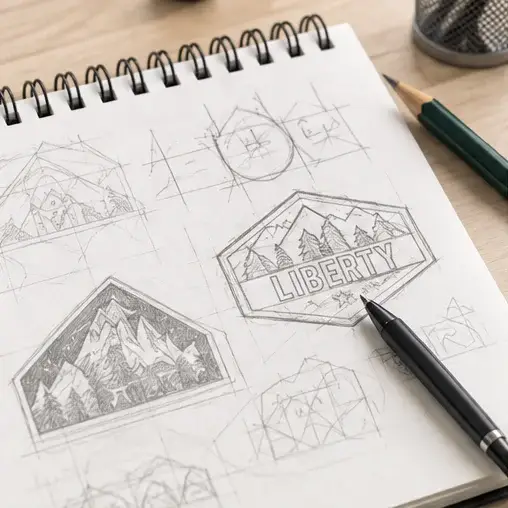
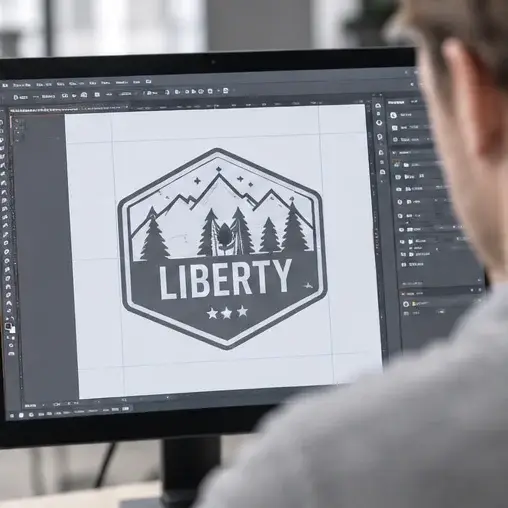
Liberty Patches checks the design against the construction, redraws rough artwork, and includes vector conversion or digitizing with a patch order.
- You
Confirm the quote
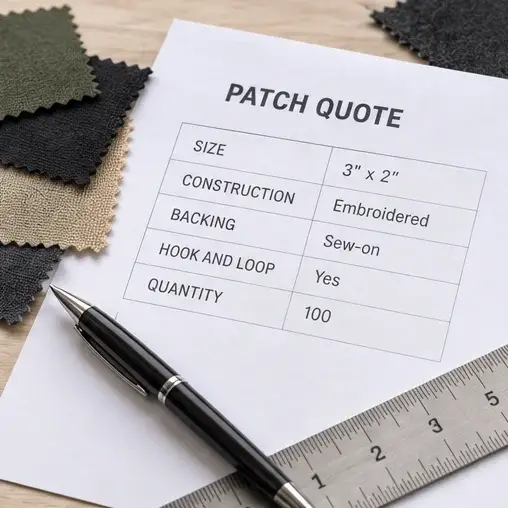
The quote confirms size, construction, backing and quantity. Valid for 14 days. A quote is a price, not a commitment.
- You
Approve the proof
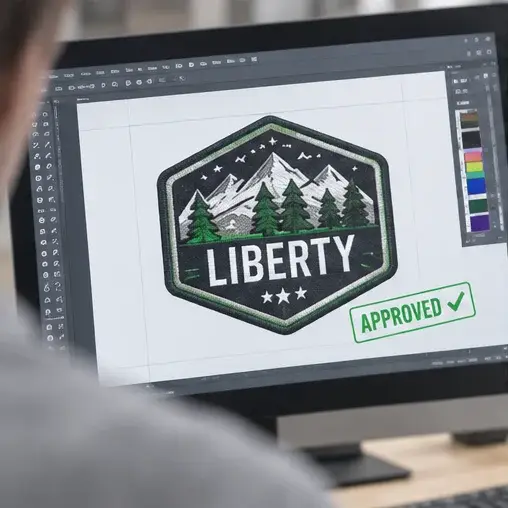
A digital proof shows size, colors, border and backing. Nothing is made before approval.
Production starts after this approval.
After approval
Liberty Patches handles the rest.
- Liberty Patches
Produce and inspect
Production follows approval and payment. The first piece is checked before the rest continues, and every piece is inspected afterward.
- Liberty Patches
Dispatch and receive
Finished patches are packed and shipped by UPS or FedEx. Tracking is sent by email or SMS where available.

