Stitch-path view
Sequence: which shape sews first, and what sits underneath what.
Digitizing plans how an approved design will be sewn on the confirmed surface.
The same design sewn on a flat twill patch, a structured cap front and a stretch panel is three different stitch files, not one file used three times. Fabric behaves differently under a needle depending on what it is and how it is held, and the file has to account for that. This is the part of the process that decides whether embroidery looks intentional or approximate.
Digitizing is included with a patch order, and standalone file work is quoted on its own. Send the artwork you have and describe where it will be sewn, because the surface is what the file is planned against.
Evidence, not decoration
Digitizing is a production decision rather than a file conversion. It sets the order the colors are sewn, what goes underneath them to hold the fabric stable, which stitch type each shape gets, and how much to over-extend shapes so they meet correctly once the fabric pulls. Get those right and the design looks like the drawing. Get them wrong and it looks like a distorted version of it.
Read the digitizing explainer →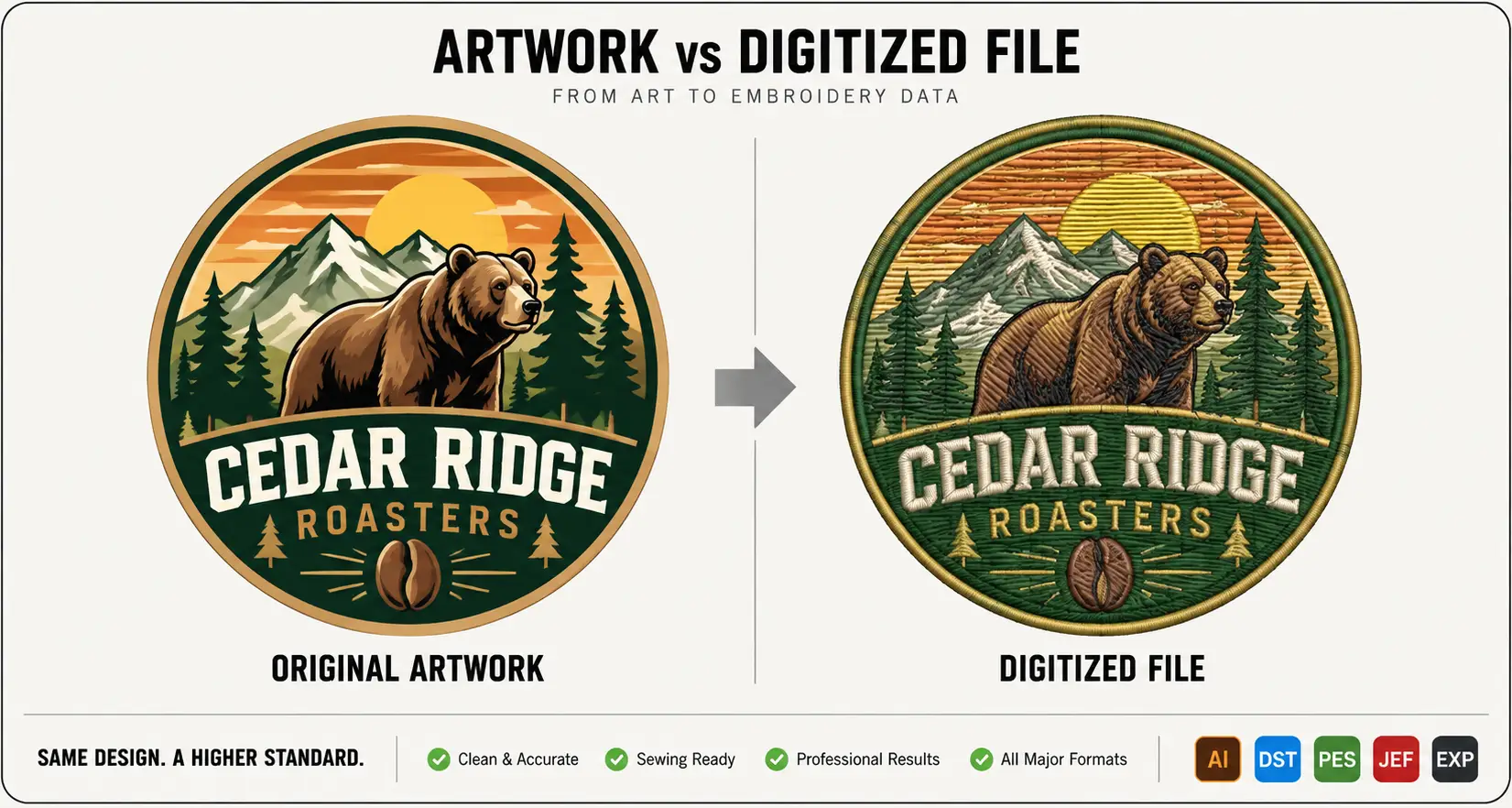
Sequence: which shape sews first, and what sits underneath what.
Underlay holding the fabric stable before the visible stitching goes down.
The same design re-planned for a curved surface rather than reused from the flat file.
Compensation applied so the colors still meet once the fabric has pulled in.
The production decisions
Sequence is the order in which the machine sews. It decides which shapes sit under which, how many color changes the run needs, and how much the fabric is moved around before the last element goes down. A well-sequenced file also runs faster, which matters on a production run rather than on a single piece.
Stitch structure means choosing what each shape is actually made of: fill, satin, run, and the density and angle of each. A satin column has a practical width range, so a shape too wide for satin gets a fill and a shape too narrow gets a run. Those choices are what give embroidery its direction and sheen.
Compensation accounts for the fact that fabric moves. Stitches pull the material inward as they go down, so shapes are extended slightly so they still meet where they should once the fabric has settled. How much depends on the fabric, the stitch density and the size. This is the single most common reason a patch ends up with gaps between colors.
Before work starts
What we need in the brief is the physical context, not just the artwork. Which construction, what finished size, what fabric or garment it is being sewn on, and whether there is a backing behind it. Where the construction calls for it, a new design gets a test sewout before the full run so the file can be corrected against a real result rather than a screen preview.
| Confirm | Why it matters |
|---|---|
| Finished size | Small text, narrow gaps, and stitch choices change with scale. |
| Surface and placement | A cap front, patch field, and flat garment panel do not present the same constraints. |
| Machine format | The required output should be named instead of assumed. |
| Validation and revisions | Confirm what is reviewed, what triggers a revision, and how handoff is accepted. |
Handoff boundary
What you receive, which formats, and what happens to the file afterward are set out in your quote rather than assumed. Ask for the deliverables to be named and they will be. We do not publish blanket ownership or retention terms here, because those belong in the agreement covering your order.
See the file handoff policy